
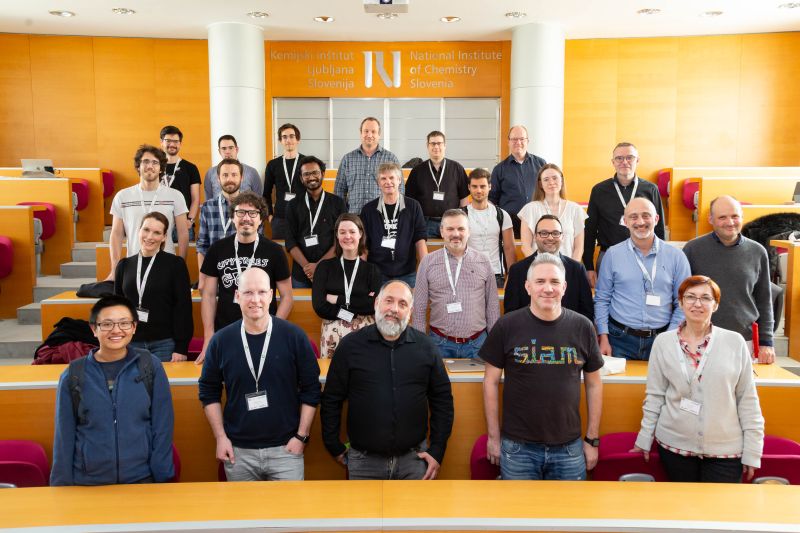
In the CECAM Flagship Workshop “Modeling & Simulation of Fluid-Structure Interactions Across Scales” held at the National Institute of Chemistry in Ljubljana (Slovenia), …

Authors: Jean-Noël Grad and the TeachingRSE working group The term Research Software Engineer (RSE) was coined a decade ago to describe individuals in …
The European Environment for Scientific Software Installations (EESSI) has been featured in the EuroHPC Joint Undertaking (EuroHPC JU) Blog post: “EESSI Does It! …
CECAM Workshop – Modeling & Simulation of Fluid-Structure Interactions Across Scales April 8, 2025 – April 11, 2025 Registration deadline: April 7, 2025 …
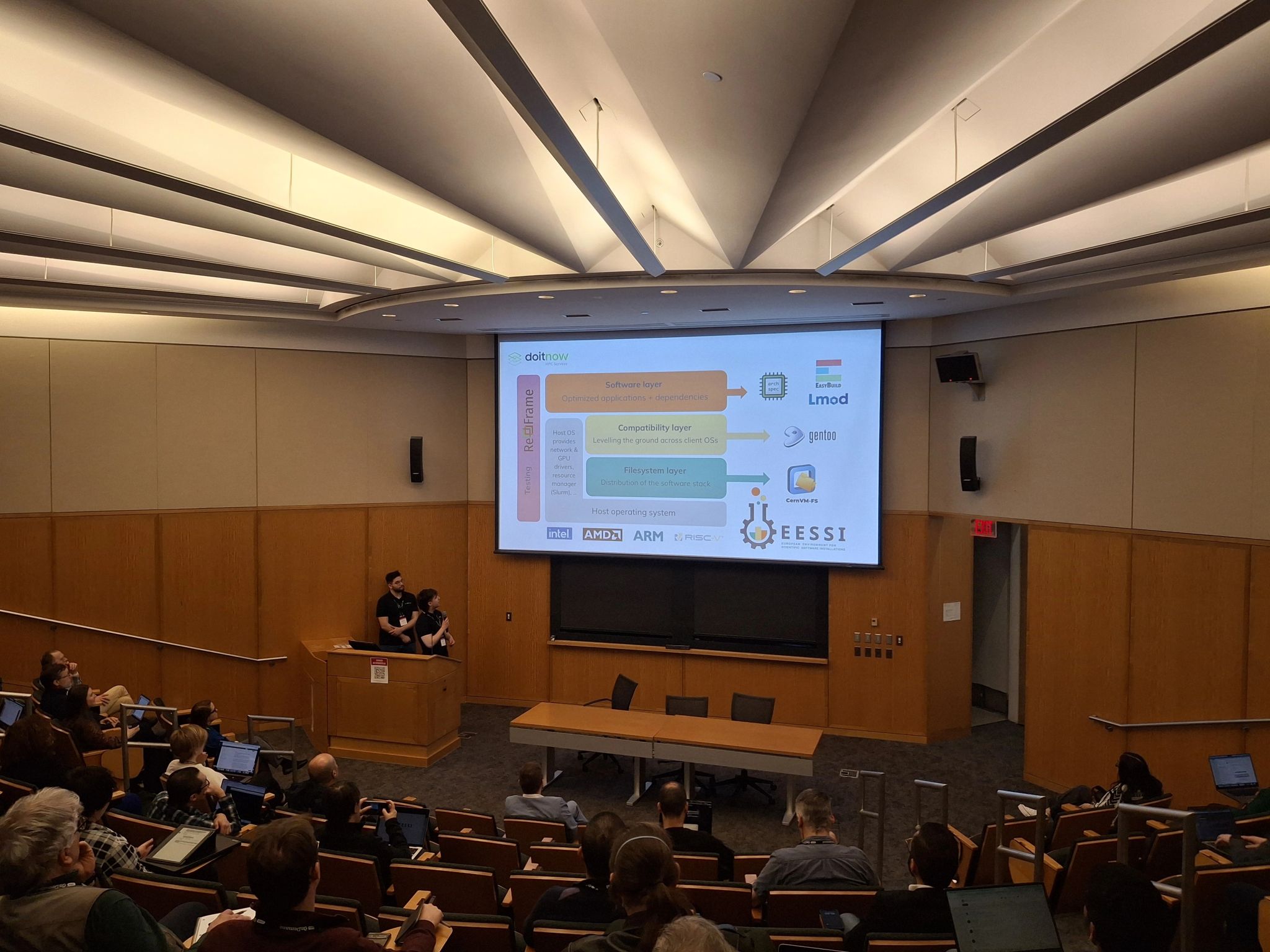
“OOD Meets EESSI: Accessing and Distributing Scientific Software with Ease” by our HPC experts Christian Bustelo and Arturo Gimeno at Global Open OnDemand …

MultiXscale experts Céline Merlet and Lara Peeters have been featured in the SC25 HPC Ignities Women’s History Month, a special issue that highlights …
MultiXscale experts will give the following talks during the 10th EasyBuild User Meeting, to be carried out this week in Jülich, Germany: Thursday …
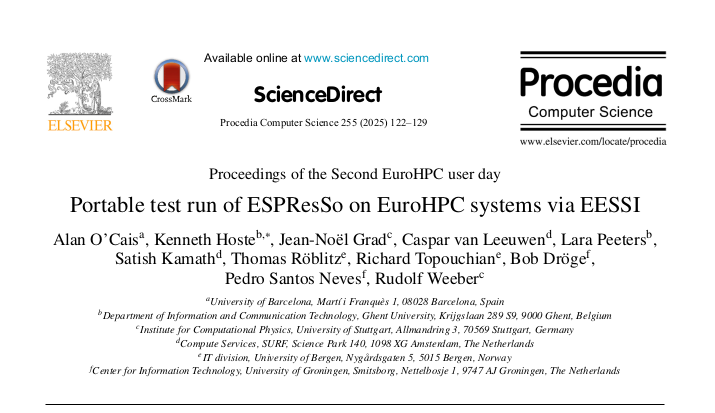
The “Portable test run of ESPResSo on EuroHPC systems via EESSI” article has been published on Procedia Computer Science on 7th March 2025. …
Several partners of the MultiXscale Center of Excellence will be involved in the EuroHPC Summit 2025, to be carried out at the ICE …
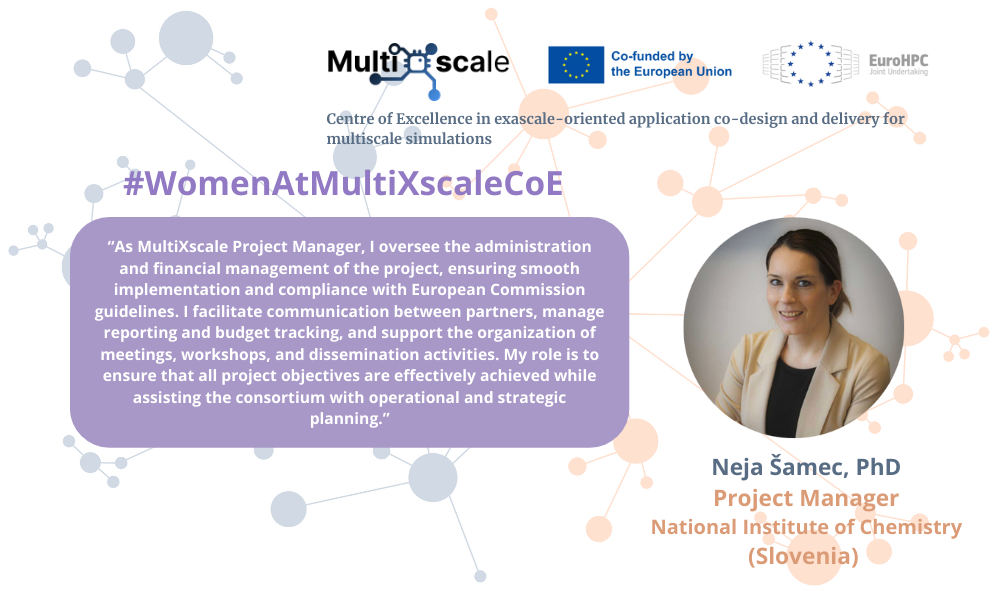
This week, we celebrate the International Women’s Day 2025 (8 March) by featuring the amazing women involved in our MultiXscale Center of Excellence. …
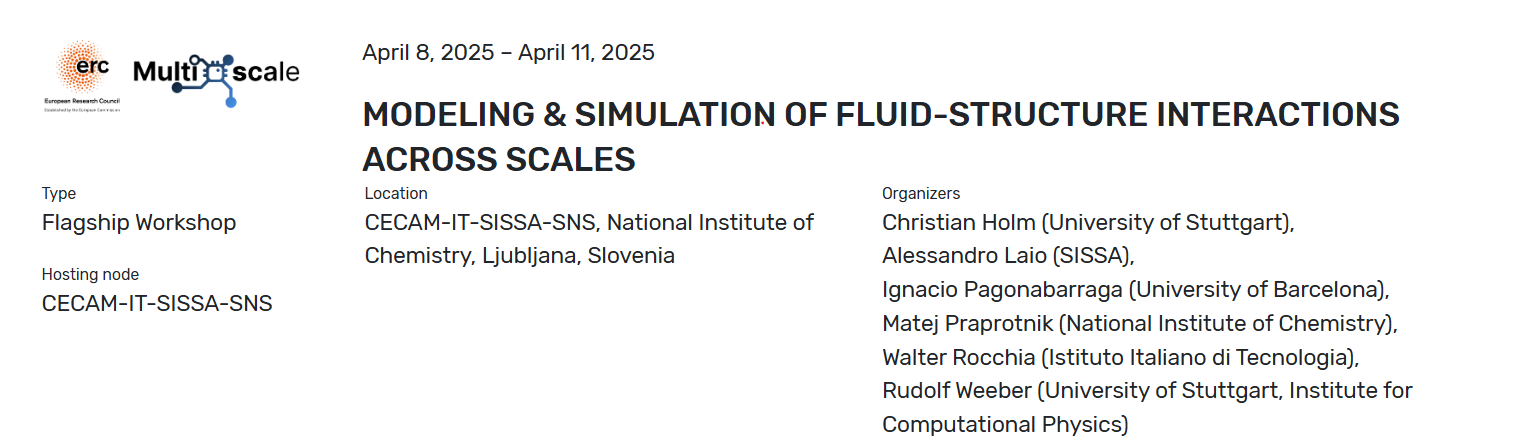
We are pleased to invite you to the workshop Modeling & Simulation of Fluid-Structure Interactions Across Scales, taking place on April 8–11, 2025, at National …
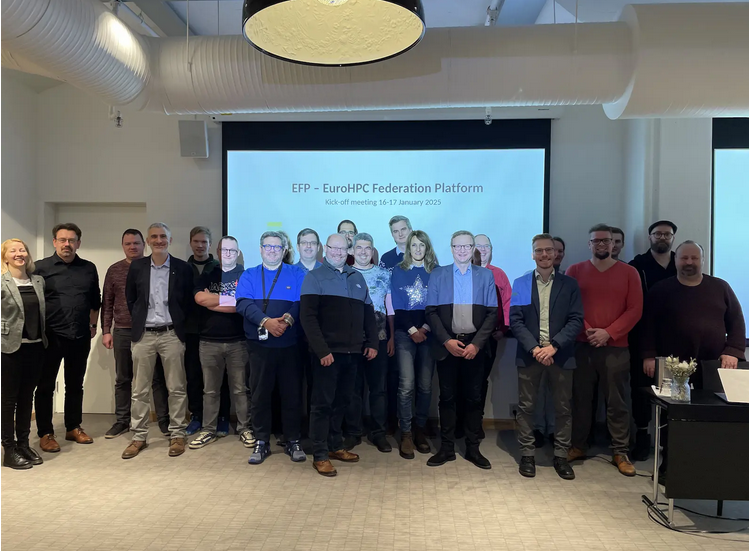
A couple of weeks ago the EuroHPC Joint Undertaking (EuroHPC JU) announced the consortium that will develop the EuroHPC Federation Platform (EFP). This …