
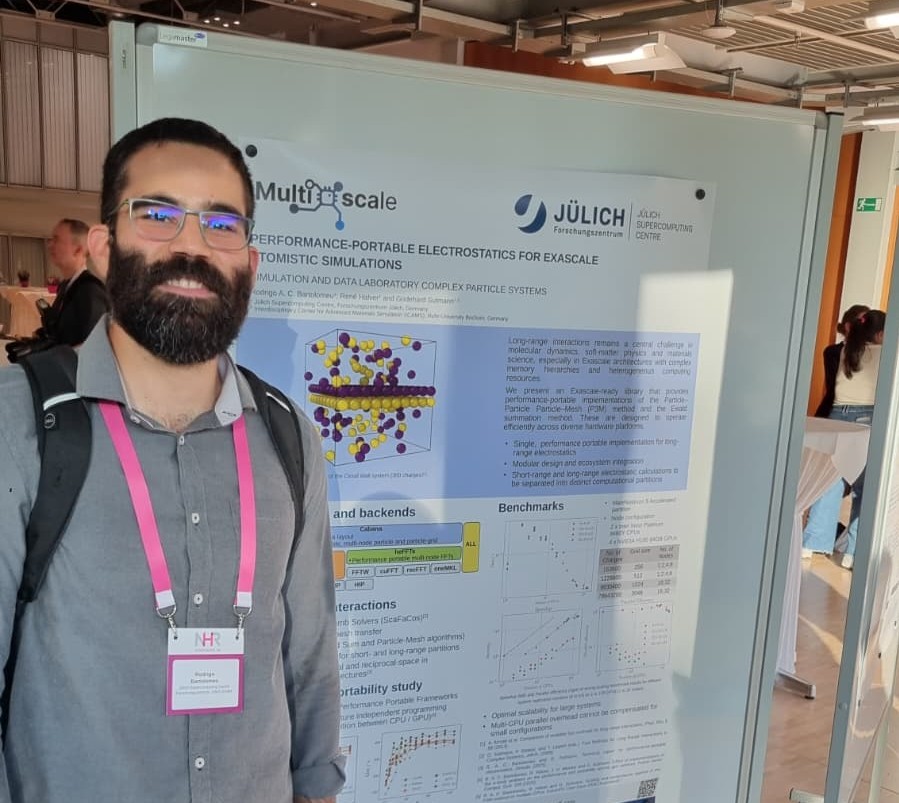
MultiXscale expert Rodrigo Bartolomeu presented his work on: “Performance Portable Electrostatics for Exascale Atomistic Simulations” at the NHR Conference ’26, held in Paderborn …
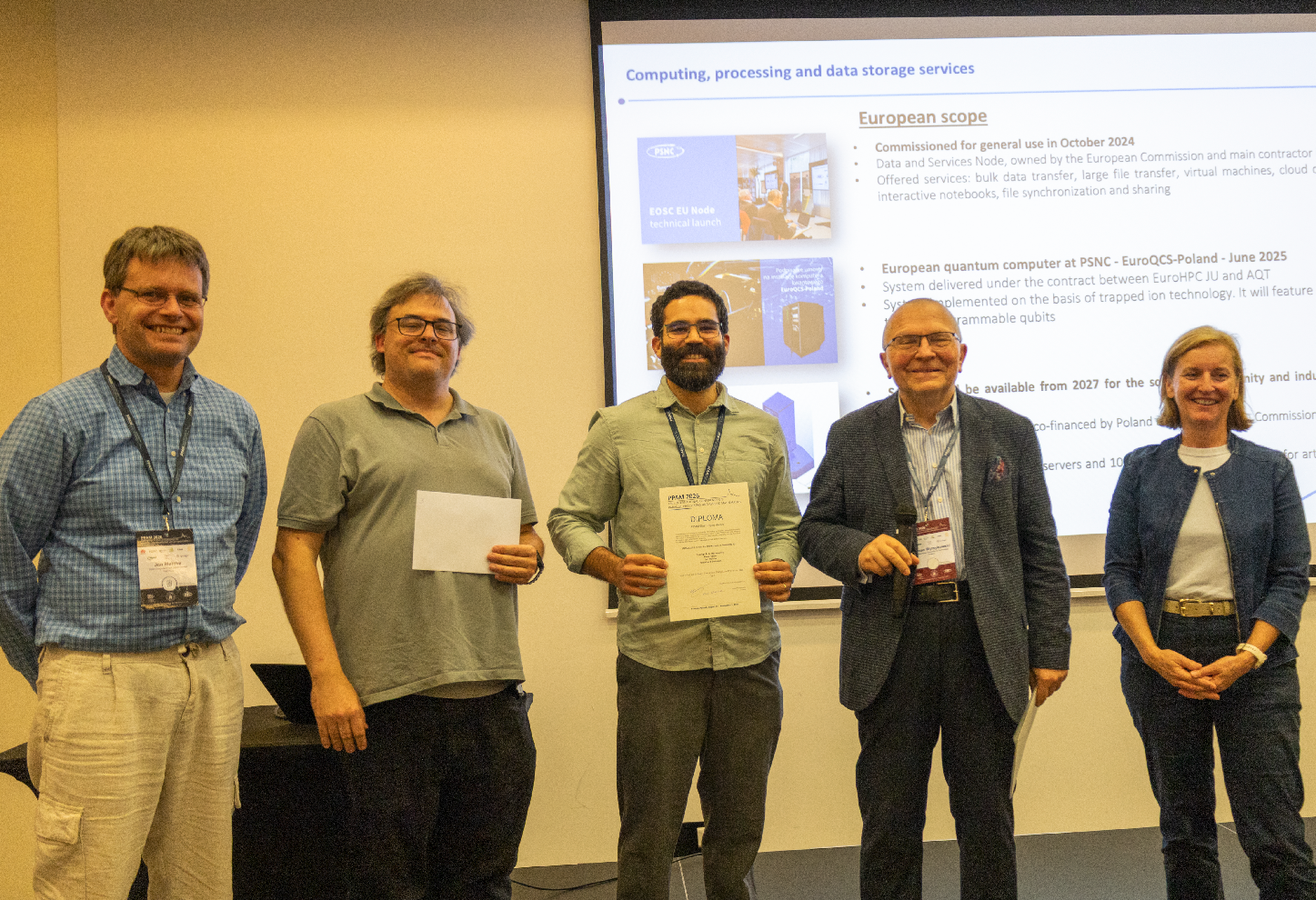
Rodrigo Bartolomeu, Rene Halver, Jan Meinke and Godehard Sutmann have received the PPAM Best Paper Award, in the category of PPAM 2026 Award …
The European Environment for Scientific Software Installations (EESSI) has been nominated again for the HPCwire Readers’ Choice Awards in the “Best HPC/AI Programming …
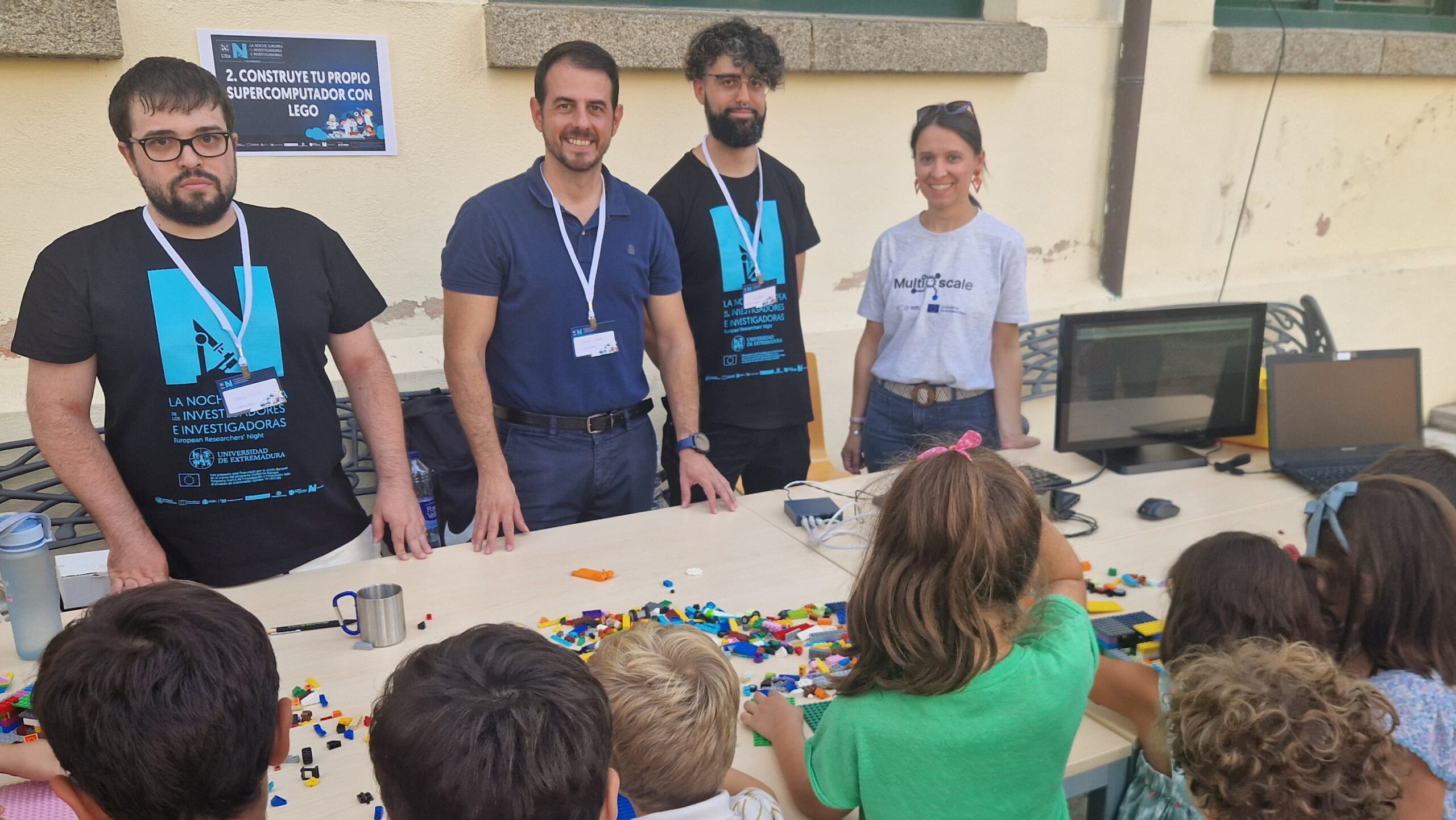
Last Friday 25 September, MutiXscale CoE collaborated with the activity “Mini-supercomputers in your hands, made with LEGO bricks”, organized by the Computing and …
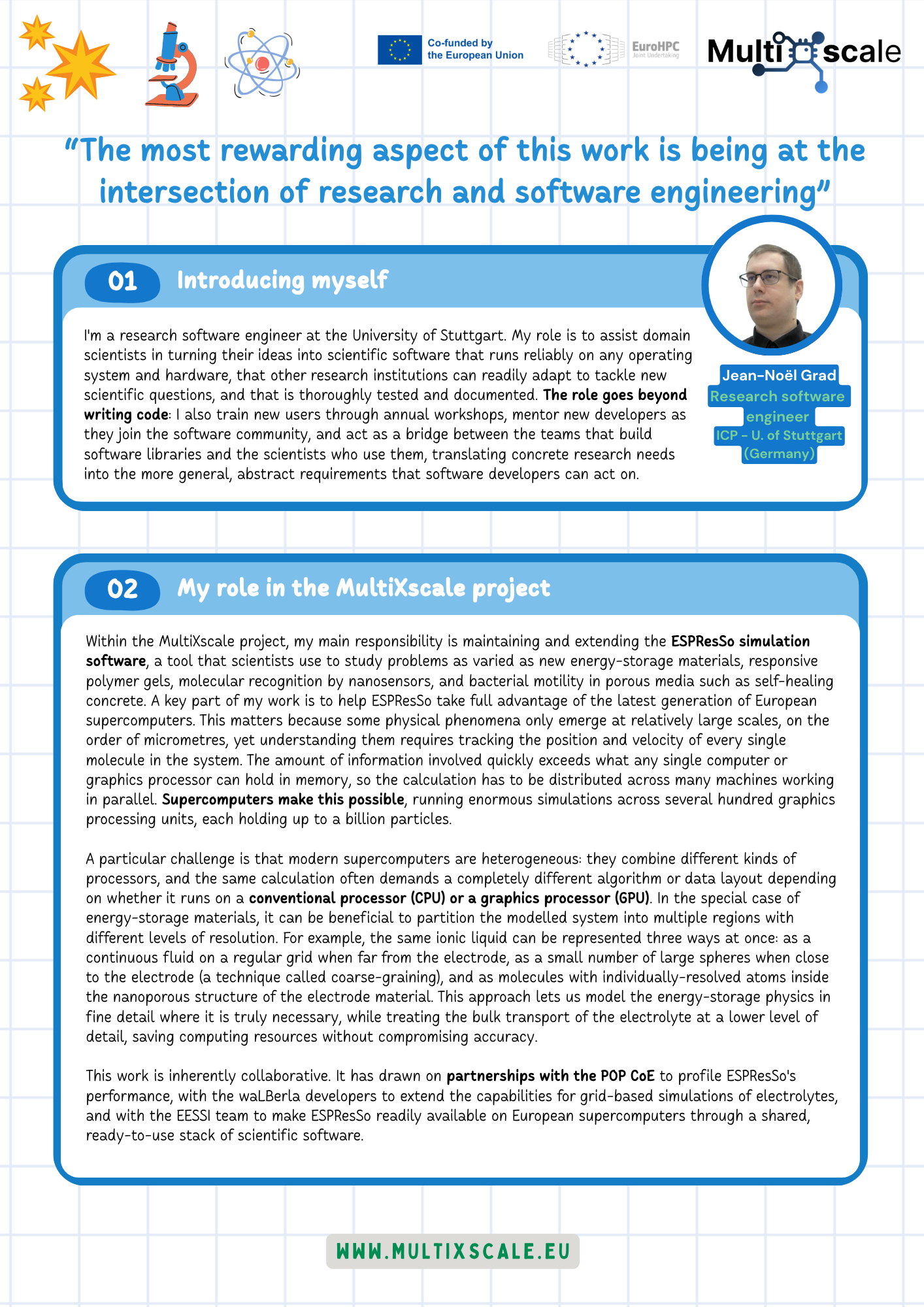
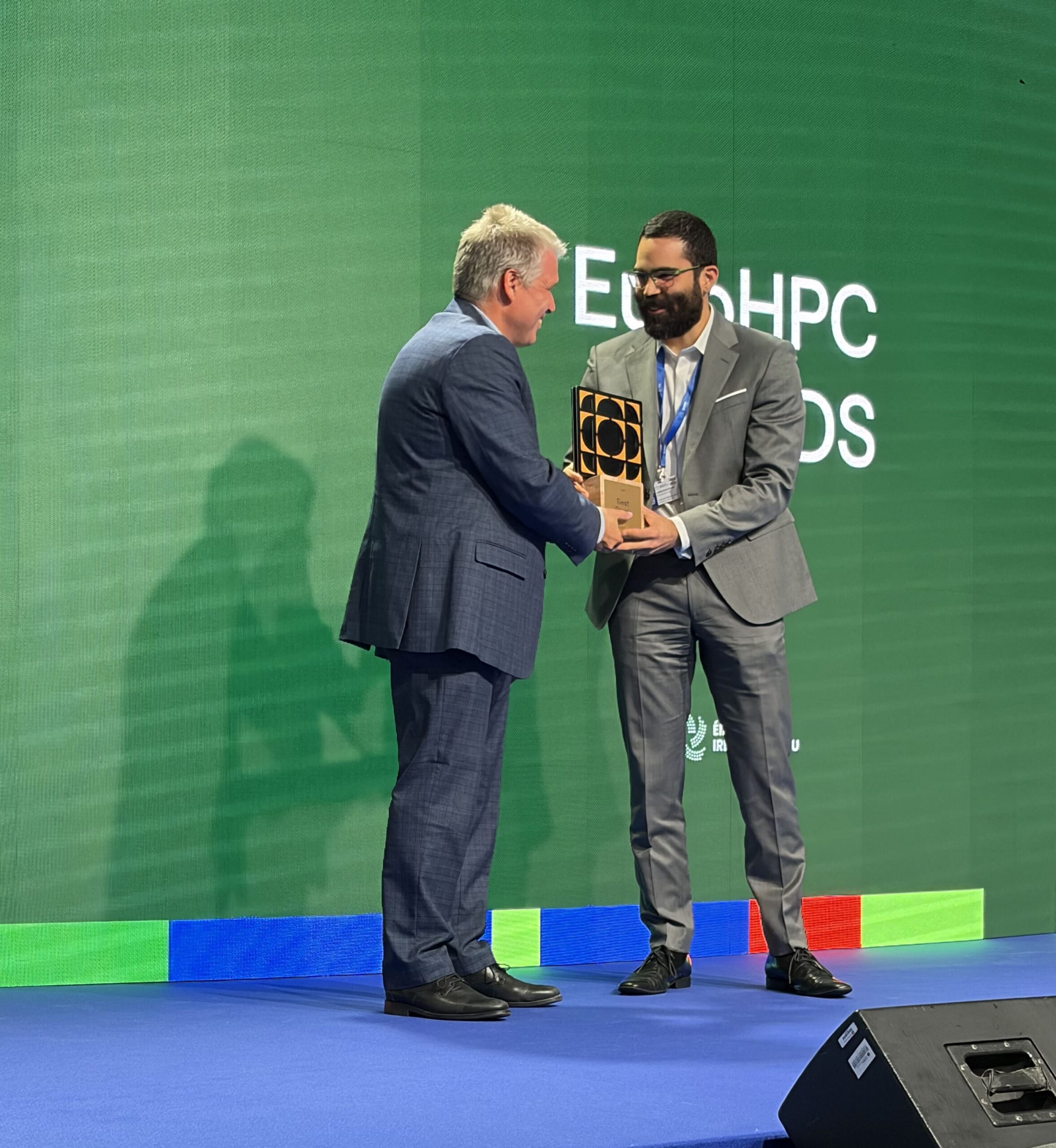
MultiXscale expert, Dr. Rodrigo Bartolomeu and members of MultiXscale CoE, have received one of the two Best Papers Awards at the EuroHPC User …

MultiXscale CoE will collaborate with the activity “Mini-supercomputers in your hands made with LEGO bricks”, organized by the Computing and Advanced Technologies Foundation …
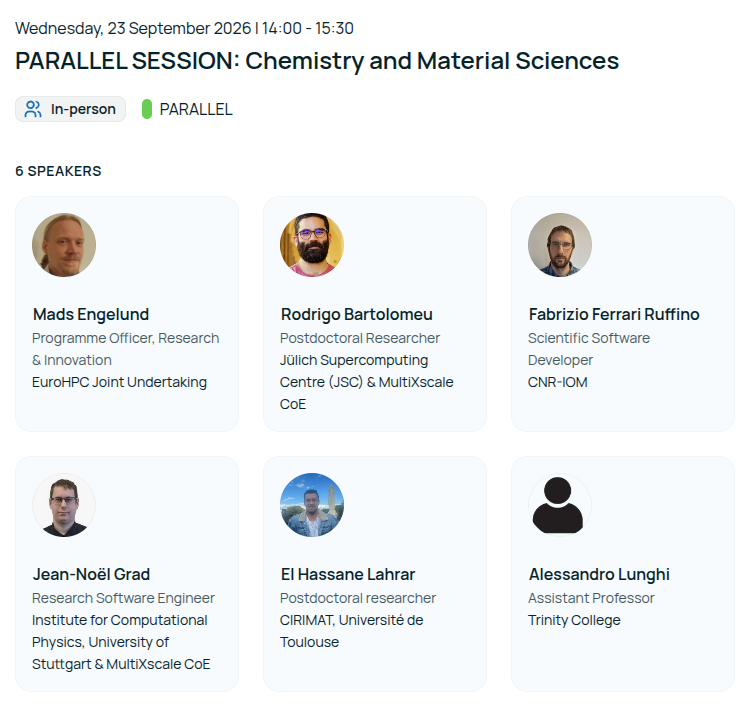
The following articles, published in Procedia Computer Science by MultiXscale experts, will be presented at the Parallel Session “Chemistry and Material Sciences” organized on …